

What is a Military-Grade PCB?
These are printed circuit boards built for defense and aerospace systems. They are specifically engineered to maintain 100% operational reliability in the most unforgiving environments.
Unlike standard commercial boards, a military circuit board is designed to withstand extreme thermal cycling, high-impact mechanical shock, harsher electrical conditions, and intense, sustained vibration.
Through all these harsh conditions, these ruggedized electronics must operate flawlessly because they serve as the backbone of modern security systems. Production of military-grade circuit boards also means that you need specialized mil-spec PCB fabrication techniques and high-performance materials like polyimide or ceramic-based substrates.
Every military-grade PCB must adhere to very strict Department of Defense standards and ITAR compliance to guarantee performance during high-stakes missions.
That means these boards must meet stricter inspection, traceability, and reliability standards than commercial electronics to ensure that the finishes have great properties of solderability, corrosion resistance, conductivity, and long-term reliability in defense electronics manufacturing and its applications.
Rugged PCB Manufacturing & ITAR Registration
PCB manufacturers for military applications know that these electronic devices often endure conditions such as extreme environments, temperature fluctuations, and exposure to corrosive elements. Given these demanding circumstances, the electronic components must rely on high-quality plating that meets military-grade specifications to ensure their reliability and performance.
Military-grade circuit board plating standards are primarily implemented by the Department of Defense to address factors like conductivity, insulation, hardness, ruggedness, chemical resistance, and oxygen deprivation while adhering to ITAR PCB compliance.
As a registered service provider under the International Traffic in Arms Regulations (ITAR), we meticulously adhere to the regulations governing the manufacture, export, and temporary import of defense articles. Additionally, we strictly comply with the rules surrounding the provision of defense services and brokering activities associated with items like military-grade PCBs and others listed on the United States Munitions List (USML).
These regulations undergo regular updates and revisions to align with advancements in technology, as well as changes in U.S. national security and foreign policy interests.

Military-Grade Plating Technologies
When it comes to plating that requires mission-critical reliability, like aerospace PCB plating or services that call for space-grade PCB materials, we use advanced plating technologies that are meant to meet these needs. Our specialized military-grade PCB plating capabilities include:
- Electroless Nickel Immersion Gold (ENIG): ENIG provides a superior flat surface and excellent solderability for high-reliability PCB assembly.
- Nickel-Gold Plating: Offers the exceptional wear resistance and electrical conductivity required by military electronics manufacturing standards.
- Immersion silver: A high-performance immersion silver finish that ensures optimal signal integrity for aerospace applications.
- High-reliability copper plating: Essential for creating robust, durable through-hole structures in ruggedized electronics manufacturing.
Military-Grade PCB Plating Services Offered by Alternate Finishing, Inc.
From Massachusetts, AFI provides plating support for military PCBs and related electronics components from manufacturers in New England and across the U.S. and Canada. We offer:
- Advanced PCB metal-plating for next-gen military and aerospace electronics
- High-reliability metal finishing for advanced military circuit boards and other defense electronics
- Custom metal finishing services for mission-critical electronics plating
- Innovative surface treatments for high-performance military PCBs
- Ultra-reliable metal finishing for military and aerospace applications
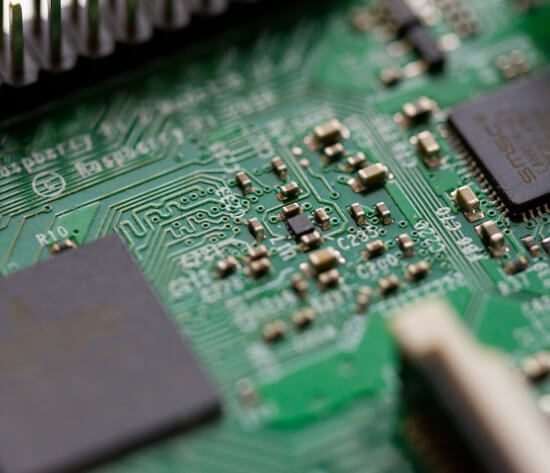
Features of Military-Grade and Defense PCBs
Military circuit boards are manufactured with unique specifications and features that set them apart from commercial-grade PCBs. Here are some of those features.
Mil-Spec Materials
The PCBs are constructed using specialized materials designed for harsh climates. These include high-performance laminates and substrates that offer superior thermal stability, mechanical strength, resistance to chemicals, moisture, and radiation. The common materials used in these PCBs include:
- High-Density Interconnect Materials: These provide higher circuit density and are ideal for compact, high-performance military-grade electronic components.
- Polyimide and PTFE: These materials offer excellent thermal stability and resistance to high-frequency signals, often necessary for aerospace and radar applications.
- Ceramic-Based PCBs: These substrates are used in high-temperature applications due to their exceptional heat resistance and low thermal expansion.
Enhanced Plating and Coatings
Military-grade PCBs also require advanced plating surfaces and coatings to improve performance, ensure durability, and meet stringent standards. The most common plating techniques for these PCBs are gold plating, nickel plating, silver plating, and tin/lead plating.
ITAR Compliance and Regulatory Standards
Military circuit boards must adhere to a range of regulatory standards to ensure they meet the needs of the defense and aerospace industries. Some of those regulations include:
- ITAR: This stands for the International Traffic in Arms Regulations. ITAR governs the manufacturing, export, and import of defense-related technologies. Military-grade PCBs must comply with ITAR regulations to ensure that they are not inadvertently diverted by unauthorized foreign entities.
- IPC Class 3: This is the highest industry standard for high-performance electronic products. IPC Class 3 PCB requirements are reserved for mission-critical electronics, where continued performance is non-negotiable, and equipment downtime cannot be tolerated.
- MIL-PRF-31032: This specification outlines the requirements for the performance, qualification, and testing of military circuit boards.
- MIL-STD-275: A standard for PCB fabrication that ensures the circuit boards meet the ruggedness and reliability requirements of military applications.
- MIL-STD-810 (Environmental Testing): This standard focuses on environmental engineering considerations. It involves a series of laboratory tests to simulate how military-grade PCBs and electronics will perform under environmental stresses such as extreme temperatures, humidity, and pressure.
- DoD Electronics Reliability Requirements: These are meant to ensure that all plating and finishing processes align with the DoD benchmarks for long-term reliability and mission success in the field.
Mechanical and Thermal Properties
These PCBs must be able to endure extreme physical and environmental conditions, which require better mechanical properties and thermal management capabilities. Specific features that contribute to these properties include:
- Vibration resistance, since they are always subjected to intense vibrations from military vehicles and missiles. Military-grade PCBs must therefore be designed to resist fatigue, cracking, delamination, and other effects.
- Shock resistance is also important for sudden impacts, such as those in explosive environments.
- Thermal management, since heat dissipation in high-power military applications, is so important. Military PCBs can have thermal vias, heat sinks, and ceramic substrates to manage high temperatures and prevent thermal damage.
Signal Integrity and High- Frequency Performance
Military circuit boards also need to maintain high-frequency performance and signal integrity for mission-critical applications like radar and communication systems. Features like impedance control to prevent signal loss and the use of low-loss materials like PTFE to reduce attenuation are among some of the many elements that ensure minimal signal degradation and reliable operation in demanding environments.
Testing Standards for Military-Grade Boards
A military-grade PCB must undergo testing that confirms that the finished board meets the mechanical, thermal, and electrical requirements specified for the project.
Depending on the program, military circuit boards may be evaluated under IPC-6012 Class 3, MIL-PRF-31032, and application-specific environmental requirements. PCB reliability testing can include:
- Visual and dimensional inspection
- Microsection analysis of plated-hole integrity
- Solderability checks
- Plating-adhesion testing
- Dielectric evaluation
- Thermal stress testing
Some programs may also require vibration testing and thermal-shock resistance testing. The applicable contract and drawings determine the required test sequence, sampling plan, acceptance criteria, and documentation.
Electrical Test Requirements Under MIL-PRF-55110
Under MIL-PRF-55110, a military-grade PCB must pass electrical checks that verify intended connections and confirm that isolated conductors remain separate.
Production continuity testing rejects circuits with resistance exceeding 10 ohms, while isolation testing requires more than 2 megaohms of resistance between mutually isolated conductors.
Dielectric-withstanding testing must also reveal no flashover, sparkover, or insulation breakdown.
These checks identify open circuits, unintended shorts, and dielectric defects before military circuit boards enter assembly. The applicable drawings and procurement documents may establish additional limits or test conditions for the specific board design.
Applications and Types of PCBs for the Military and Defense Industry
The construction of a military-grade PCB depends on the system’s space, signal frequency, and environmental demands. This means that these types of PCBs must be designed to preserve signal integrity and durability of high-reliability electronics in demanding conditions. Common types and uses include:
- Rigid PCBs: Radar equipment and weapons-control systems
- Flex and Rigid-Flex PCBs: Compact avionics PCB manufacturing and assemblies with moving connections
- High-Density Interconnect PCBs: Adaptive electronics requiring dense component placement
- RF and Microwave PCBs: Secure communications and electronic-warfare systems
- High-Reliability PCBs: Satellite controls and other space electronics

Work With Us
Whether you need leading-edge electroless nickel plating for military circuit boards, enhanced reliability through military-grade PCB metal finishing, advanced metal finishing for high-performance military electronics, or any other of the services we mentioned above, AFI is ready to work with you.
If you are located in the United States or Canada and require fast and reliable mil-spec plating services, call us for a free quote.
Frequently Asked Questions
Why is PCB Plating Important in Military Applications?
What Types of Metals are Typically Used for Military-Grade PCB Plating?
How Does PCB Plating Enhance Conductivity?
How Does PCB Plating Impact Signal Integrity in Military Applications?
Are There Different Plating Techniques for Military-Grade PCBs?
What Types of Mil-Spec PCB Plating Services Does Alternate Finishing, Inc. Offer?
What makes a PCB military-grade?
These boards are military-grade if they are designed and specifically engineered for harsher conditions, like being able to operate reliably under constant vibration, shock, extreme temperatures, humidity, and long service cycles.
This type of performance is achieved through strict material controls and processes that prioritize thermal stability, mechanical strength, and resistance to corrosion. That’s why you’ll find them with unique specifications like increased copper weight and better thermal management features.
What plating is best for military-grade PCBs?
- ENIG plating when the application calls for flatness, solderability, and corrosion resistance.
- Immersion silver, which supports strong conductivity.
- High-reliability copper plating for dependable connections and plated through-holes.
What standards must military PCBs meet?
Military-grade PCBs need to meet a combination of regulatory, performance, preference, and environmental requirements, depending on the project. These usually include ITAR controls for defense-related work, IPC Class 3 expectations for high-reliability electronics, and military specifications like MIL-PRF-31032.
For environmental testing standards, MIL-STD-810 may also shape how the board is evaluated for field conditions such as shock, vibration, moisture, and temperature stress. These standards are usually driven by the end application and customer requirements.
How does ENIG plating improve military-grade PCB reliability?
What is the difference between a mil-spec PCB and a commercial PCB?
A mil-spec PCB is typically built to stricter material, process, inspection, and documentation requirements than a commercial board. Commercial PCBs, on the other hand, are designed for cost-efficiency in controlled settings.
This means that commercial PCBs may perform well in everyday products, but military circuit boards are generally expected to handle more severe environments and more demanding reliability standards. These differences range from how the board is used to how much risk the application can tolerate.