
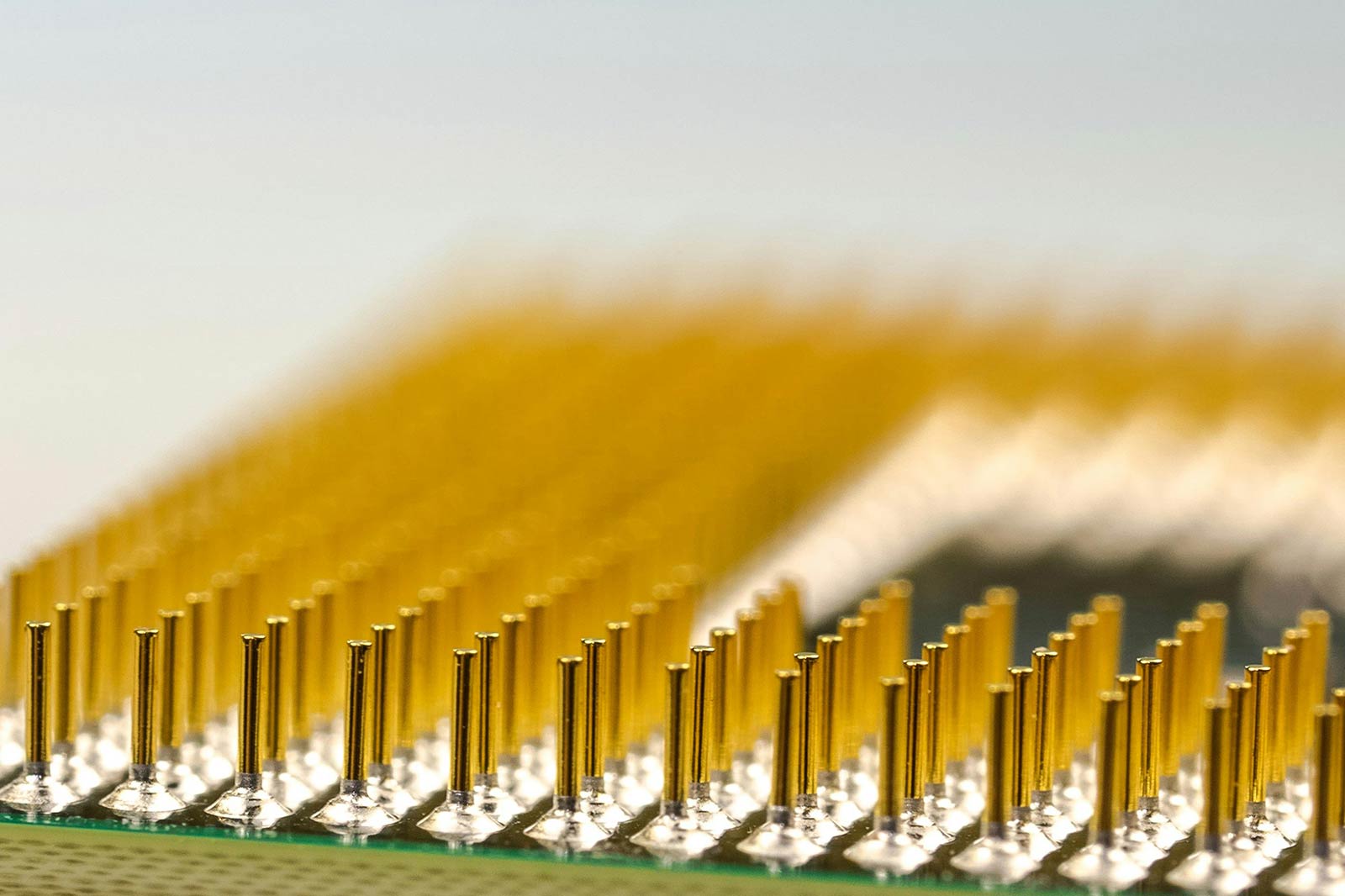
Gold Plating for Quality PCB Finishes
Gold is prized for its exceptional conductivity, resistance to oxidation, durability, and aesthetics under harsh environmental conditions. Gold plating PCBs gives them better performance and longevity, especially in high-reliability sectors like aerospace, defense, and medical electronics. At Alternate Finishing, Inc., we offer hard gold (Type II, Code C) for contact and wear resistance, and soft gold (Type III code A) for applications requiring wire bonding, excellent solderability, and low contact resistance.
In addition to standalone gold plating, we also offer specialized gold plating services such as ENIG (Electroless Nickel and Immersion Gold) and Reduction-Assisted Immersion Gold (RAIG). Both of these processes provide highly uniform, solderable surfaces and are ideal for surface mount technology and BGA components.
Request a Quote
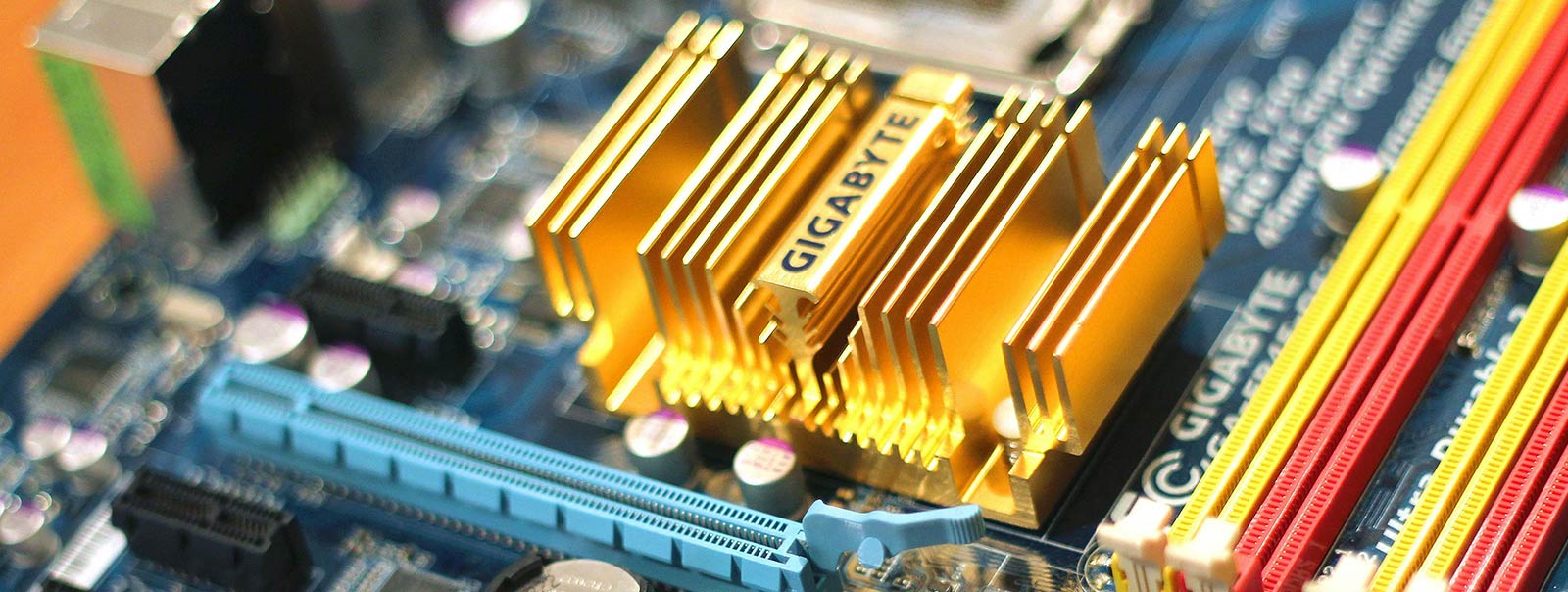
What Gold Plating is Best For
Gold plating services are best for electrical surfaces that can’t afford oxidation, unstable resistance, or cosmetic tarnish, especially where consistent conductivity is part of the design intent. At Alternate Finishing, Inc., we typically use gold plating for:
- Wear areas: we use hard gold on high-contact zones like edge connectors. These applications may require a minimum of 50 µin
- Bonding/soldering areas: we use soft gold for wire bonding and soldering, usually in the 1–20 µin range.
- Specification-driven programs: we also use gold plating in cases like ASTM B488 and others where specifications call for that.
- Long shelf-life needs: when parts must stay clean and functional in storage before assembly, we’ll use gold plating services to achieve that goa
Compatible Materials for Gold Plating
Gold plating services are typically applied over conductive base metals and plated features that can hold a stable underlayer. At Alternate Finishing, Inc., most work centers on gold plating PCBs and electronic components, including standalone gold, ENIG, and RAIG processes.
For reliable adhesion and performance, we typically use nickel underplating as the barrier layer, especially on copper circuitry, because nickel helps prevent copper diffusion into the gold and supports durability.
Compatibility is strongest when the part is designed for:
- Copper-based PCB features like pads, fingers, and traces
- Nickel-bearing surfaces where gold is the functional top layer
What Affects Turnaround Time For Gold Plating Services
Here, the turnaround times depend on job complexity and how much process control the order requires. Factors tied to the work itself, like materials, complexity, layer count, finish type, and required lead time, shape how quickly parts can move through.
For gold specifically, thickness targets can extend processing time. At AFI, we plate from 1 to 350 microinches, depending on the application.
For ENIG builds, the process is multi-step, so panel size, gold thickness, and plating precision can affect both cost and turnaround time.
Common Part Types We Plate with Gold
At AFI, we provide gold plating services mostly on electronic hardware where the gold surface is expected to stay conductive, resist oxidation, and hold up in assembly.
We use hard gold for wear-prone contact zones like edge connectors and sliding contacts, while soft gold is used for wire bonding or soldering needs
Common Part Types We Plate Include:
- PCB edge connector fingers and contact pads that experience repeated mating cycles
- Connector contacts and high-frequency contact surfaces where low contact resistance matters
- Wire-bondable features used in semiconductor and advanced electronics packaging
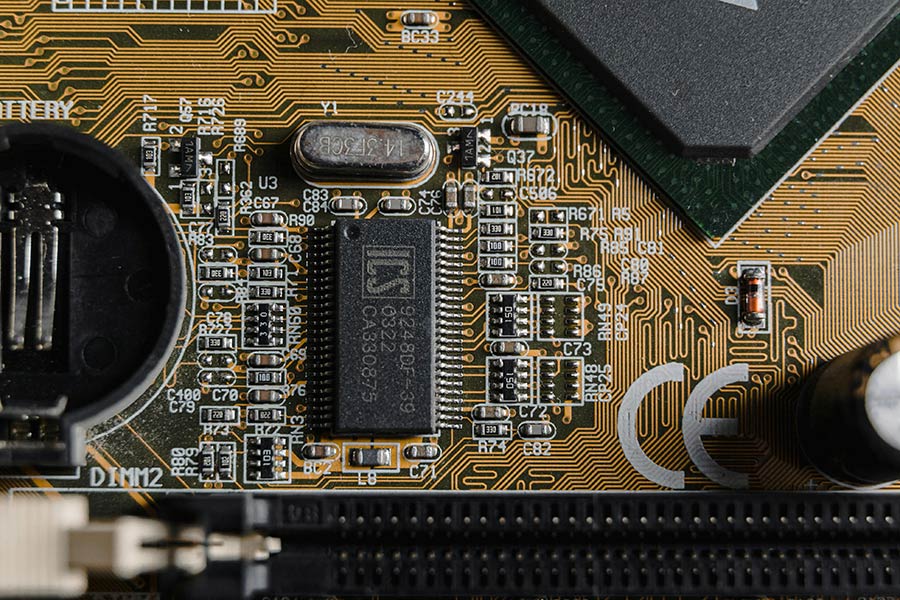
- ENIG/immersion-gold PCB surfaces designed for flat, solderable pads and tight SMT placement
Our Plating Procеss
At AFI, our gold plating process for PCBs is a highly controlled, multi-step procedure that starts with rigorous surface preparation to eliminate oxides and other contaminants. Since we offer both electrolytic and immersion gold plating, we will briefly discuss each of them now.
Electrolytic gold plating uses an electric current to deposit dense layers of gold. It is ideal for connectors and high-wear areas.
Immersion plating is a chemical process that provides uniform, solder-friendly finishes, which is why our immersion gold plating services – particularly ENIG and RAIG processes – are commonly used by PCB producers.
Work With Us
Located in the Metro Boston area, Alternate Finishing, Inc. provides precision plating services for clients across the USA and Canada and our turnarounds on jobs are fast.
For reliable and high-quality gold plating services, contact us. Our team is ready to provide you with a customized solution that meets your specific needs. Call for a Quote.
Frequently Asked Questions
What is the typical thickness of gold plating applied at Alternate Finishing, Inc.?
AFI applies gold plating in thicknesses ranging from 1 to 350 microinches, depending on the application. Soft gold finishes for wire bonding or soldering usually range from 1–20 µin. Some types of wire bonding require thicker gold. We have had customers ask for up to 350 microinches. Hard gold finishes for edge connectors may require a minimum of 50 µin. All plating is performed to meet MIL-DTL-45204 and ASTM B488 standards.
What is the difference between hard gold and soft gold plating?
Soft gold contains 99.9% pure gold, while hard gold is alloyed with small amounts of cobalt or nickel. We use each for different applications in our gold-plating services.
What are the advantages of gold plating for PCBs?
Gold plating offers excellent corrosion resistance, high electrical conductivity, and consistent solderability.