
Key Takeaways
- Rugged military PCBs survive harsh aerospace and naval conditions through the combined use of specialized plating, resilient materials, reinforced assembly methods, and strict compliance standards.
- ENIG and hard gold plating help protect exposed copper surfaces from corrosion, oxidation, and solderability issues in high-moisture and high-salinity environments.
- High-Tg materials and strong mounting methods help these boards withstand heat cycles, vibration, shock, and G-forces.
- Conformal coating, underfill, bonding, and staking add another layer of protection against moisture, chemicals, dust, and mechanical stress.
- Controlled finishing and other compliance expectations help ensure that the rugged military PCBs meet the reliability demands of defense applications.
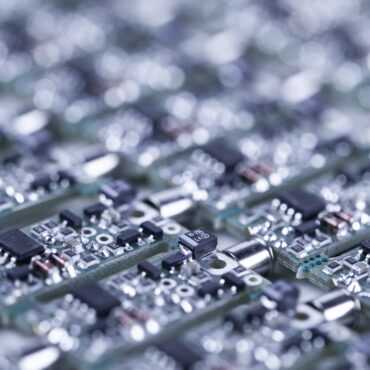
In defense applications, the failure of a rugged military PCB is not an option, even if these parts and components are constantly exposed to extreme conditions like heat, moisture, vibration, salt, and so on in ways that commercial equipment rarely (if ever) gets exposed to.
The survival of these PCBs depends on a combination of advanced material science and specialized military electronics plating. Let’s see how.
Protective Surface Finishing
The first line of defense is finishing methods like ENIG and hard gold plating. Here, the nickel layer acts as a physical barrier preventing copper migration, while the gold layer on the rugged military PCB helps protect the nickel surface and provides a perfectly flat surface for component attachment.
This is important for chemical-resistant PCBs operating in high-salinity naval environments where salt spray causes rapid corrosion.
Thermal and Material Resilience
These PCBs must also tolerate heat cycles without losing structural integrity. This type of thermal shock resistance is achieved by using high-glass transition temperature (High-Tg) materials like Polyimide in aerospace applications that must maintain structural rigidity during the extreme temperature swings of atmospheric re-entry.
Mechanical Reinforcement
Vibration, shock, and G-force can damage the rugged military PCBs and other components if the assembly is not reinforced.
Unlike commercial boards, military-grade electronics often rely on through-hole mounting to provide strong physical bonds that withstand the intense vibrations of the engines. Generally though:
- Heavy components may need stronger mounting methods.
- Larger chips may need underfill.
- Components may also be bonded or staked to limit solder joint stress.
- Conformal coating may also be used to shield the assemblies from moisture, dust, residue, and chemicals.
- In naval applications, chemical-resistant printed circuit boards may be used where cleaning agents, salt deposits, or fuel-related exposures are realistic concerns.
Standards and Controlled Finishing
When it comes to military electronics plating, a rugged military PCB can’t just pass by appearance alone. It needs documented expectations, qualified handling, and it must also meet the rigorous MIL-PRF-31032 specification.
Work With Us
As an ITAR-registered metal finishing and AS9100D-certified provider, we, at Alternate Finishing, Inc, offer the technical expertise and rapid turnaround that defense contractors need to maintain fleet readiness.
We provide reliable finishing for mission-critical PCBs and parts, including military-grade electronics. If you need dependable military electronics plating, request a quote today.
Frequently Asked Questions
Does AFI ensure the purity of precious metals used to plate rugged military PCBs?
Yes, we do. We maintain very strict bath chemistry controls and regular analysis so that the gold and nickel deposits meet the high-purity requirements of defense contracts.
Are there restrictions on the use of pure tin for military-grade electronics?
Yes. To prevent the growth of tin whiskers, which can cause catastrophic short circuits, we strictly follow military prohibitions against pure tin finishes for military electronics plating.
How is ENIG useful for aerospace and naval boards?
It’s useful when a board needs flat pads, dependable solderability, corrosion protection, and good storage stability.
Why do rugged military PCBs need special plating?
They need it because exposed copper and contact surfaces can oxidize, corrode, or become harder to solder. The special plating helps protect those surfaces before assembly and during service.

Robert Peterson is President of Alternate Finishing, an AS9100D, ISO 9001:2015, and ITAR registered metal finishing provider serving customers across the USA and Canada. With more than four decades of experience in printed circuit boards and metal finishing, Robert is certified by the National Association of Metal Finishers as an electronic specialist. He’s also an avid photographer.